
















SA’s Electric Vehicles Future: Sorting Reality from Hype
As the South African automotive landscape continues to evolve, the conversation inevitably turns to Electric Vehicles (EVs). While global markets are aggressively transitioning to battery-electric propulsion, the South African context requires a nuanced view that balances global trends with local infrastructure and economic realities.
The Current Landscape
For dealers and consumers, it is crucial to distinguish between long-term potential and immediate operational viability. Currently, the South African EV market is in an “early adopter” phase. While the number of charging stations in major hubs like Gauteng, Cape Town, and Durban is increasing, the transition faces three distinct challenges:
- Grid Reliability: The dependency on an intermittent power grid remains a primary concern for potential buyers.
- Cost of Entry: EVs currently command a significant premium over internal combustion engine (ICE) counterparts, making them inaccessible for the mass market.
- Infrastructure Spread: While urban areas are seeing improved coverage, long-distance inter-provincial travel still requires rigorous route planning.
Why It Matters for Dealers
For dealers, the “EV question” is not just about sales; it is about future-proofing your business.
- The “Halo” Effect: Even if you are not selling high volumes of EVs, having one in the showroom or incorporating EV-ready servicing capabilities can signal that your dealership is forward-thinking and tech-savvy.
- Hybrid Alternatives: For many South African consumers, the immediate bridge is the Hybrid (HEV) or Plug-in Hybrid (PHEV). These offer the fuel efficiency of electrification without the range anxiety or total reliance on charging infrastructure. Dealers should focus on educating customers on the benefits of these intermediate technologies.
- The Used Market Potential: As EV adoption grows, a secondary market for used EVs will emerge. Understanding battery health reporting and charging compatibility will become as vital as checking engine compression for traditional vehicles.
The Consumer Perspective: Is Now the Time?
For the average buyer, the decision to switch to an EV in 2026 should be driven by lifestyle rather than just trend-following:
- Urban Commuting: If your daily routine involves predictable, short-to-medium distance commutes in metro areas, the total cost of ownership (TCO) for an EV can be significantly lower over time due to reduced maintenance and fuel costs.
- Home Charging: The “game changer” for EV ownership in South Africa is the ability to charge at home, preferably coupled with a solar/inverter setup. Buyers who cannot charge at home should proceed with caution until public charging infrastructure matures.
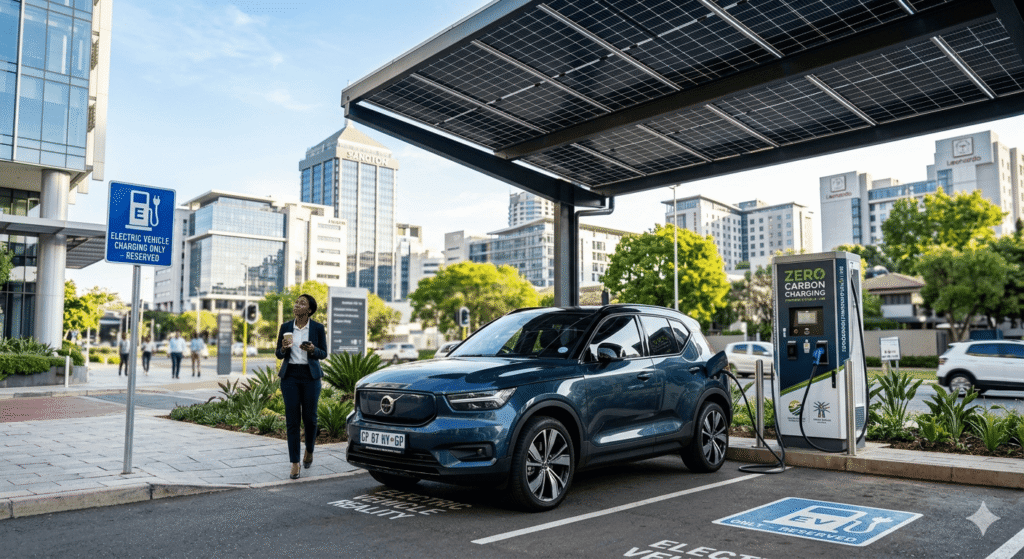
Electric mobility is coming to SA, but success depends on more than just the car—it depends on the infrastructure.
Strategic Takeaway
The South African automotive market will not switch to full electric overnight. It will be a gradual integration, characterized by a dominant hybrid phase followed by a slow, infrastructure-dependent transition to full EV.
Dealers: Focus on “Hybrid Literacy.” Your ability to explain the difference between a mild-hybrid, a full-hybrid, and an EV will be your strongest sales asset in the coming years.
Buyers: Prioritize infrastructure over aesthetics. Before buying, map your daily commute, your potential charging points, and consider the long-term resale value of the specific battery technology in the model you choose.
This series has explored the comprehensive lifecycle of the South African automotive market, from digital marketing strategies to practical consumer advice. By staying informed on shifts like electrification and hybrid technology, you remain positioned as a leader in your respective space.