











Spotting Fraud: The “Too Good to Be True” Checklist
Protecting Your Money in 2026
The online marketplace is a powerful tool, but it is also a target for sophisticated scammers. In 2026, fraudulent listings have become harder to spot—they use real photos, steal legitimate descriptions, and even pretend to be verified dealers.
At Car Listing, we believe transparency is the most important feature we can offer. While we work hard to keep our platform clean, you are your own first line of defense. If you follow this “Too Good to Be True” checklist, you will be able to spot a scam before you ever part with a single cent.
The “Too Good to Be True” Warning Signs
If a listing hits even one of these triggers, proceed with extreme caution. If it hits two or more, walk away immediately:
- The Price is Just “Too Low”: If a 2024 VW Polo is listed for R120,000 when the market average is R250,000, it is not a “bargain”—it is a trap. Scammers use low prices to override your critical thinking.
- The “Urgent” Pressure: Scammers will often tell you there is “huge interest,” a “buyer coming from out of town,” or that they are “relocating abroad” and need the money today. They want you to rush so you don’t do your homework.
- The “Deposit-First” Demand: Never, ever pay a “reservation fee” or a “holding deposit” before you have seen the car in person, verified the seller’s identity, and confirmed the vehicle’s history.
- Reluctance for a Physical Meetup: If the seller has a dozen excuses for why they cannot meet you at a public place or a dealership, they do not have the car. Period.
Your Safety Toolkit
Use this verification process every time you reach out to a seller:
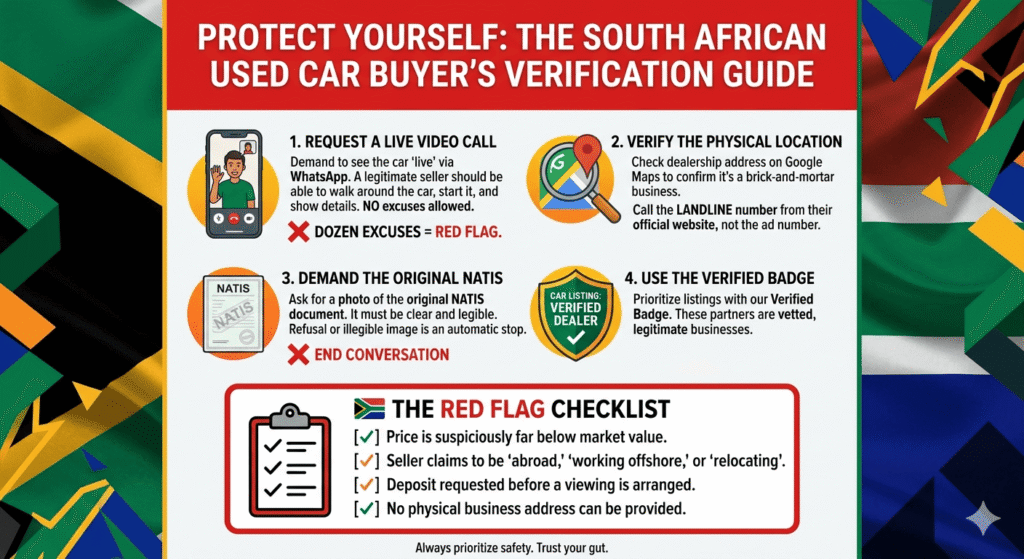
- Request a Video Call: Ask the seller to show you the car “live” over WhatsApp video. If they cannot do this or have a dozen excuses, they are a red flag.
- Verify the Location: If they claim to be a dealership, check their physical address on Google Maps. Call the landline number listed on their official website (not the number in the ad).
- Check the NATIS: Ask to see a photo of the original NATIS document. If the seller refuses or sends an illegible/watermarked image, end the conversation.
- Use the “Car Listing” Verified Badge: Look for listings with our “Verified Dealer” badge. We work to ensure our partners are legitimate, brick-and-mortar businesses.
If you see these signs, walk away immediately.
How to Report a Suspicious Listing
If you find a listing that feels wrong, don’t just ignore it—help protect the community.
On every page at Car Listing, you will see a “Report This Listing” button. When you report a suspicious ad, our team reviews it immediately. We take a zero-tolerance approach to fraud. By speaking up, you aren’t just protecting yourself; you are ensuring that your fellow South Africans don’t lose their hard-earned savings to criminals.
Trust Your Instincts
Buying a car is a major financial decision. It is okay to be cautious, it is okay to ask for proof, and it is perfectly fine to say “no” to a deal that feels forced. When in doubt, lean on the verified, established dealers who are working hard to build a reputation—not just a quick score.
Stay safe, stay sharp, and always use the verified resources available on Car Listing.