















Beyond the VIN: The Truth About Vehicle History
The “Accident-Free” Myth
“Accident-free.” You see it in almost every online listing. It’s the most common claim sellers make, but in the South African used car market, it’s a term that is frequently misused. Some sellers use it to mean the car has never been in a major collision, while others use it to mean the car has never even had a minor scratch.
The reality is that a verbal claim is not a substitute for data. When you are putting your hard-earned money into a vehicle, you need to look beyond the shiny paint and into the car’s actual history.
Why the VIN is Only the Beginning
The VIN (Vehicle Identification Number) is the car’s fingerprint. It tells you the make, model, and year, but it doesn’t always tell the story of what happened to the car in the last five years.
To get the full picture, you need to go “Beyond the VIN.” Here is what you should be looking for:
- Service History vs. Service Book: A stamped service book is good, but verifiable invoices are better. A stamp proves a service happened; an invoice proves what was actually replaced and what hidden problems were addressed.
- The “Finance Check”: Never assume a car is fully paid off. A vehicle could be under a lien or have outstanding finance tied to it. A comprehensive history check will reveal if the bank still technically “owns” the vehicle, preventing you from buying a car that could be repossessed.
- Traffic Fines and NATIS Status: A vehicle check can reveal if the car has a mountain of unpaid traffic fines tied to its license plate. You don’t want to buy a car only to find out you can’t renew the license because of the previous owner’s unpaid debts.
- The “Written-Off” Flag: Some vehicles have been “written off” by insurance companies but were repaired and put back on the road. A history check will flag these vehicles, which often have structural integrity issues that aren’t visible to the naked eye.
How to Conduct a Real Vehicle Check
You don’t need to be a mechanic to get the facts. In 2026, you have access to powerful tools that provide a detailed report in minutes:
- Use Third-Party Check Services: Several reputable companies in South Africa offer vehicle history reports based on the VIN. They aggregate data from insurance, police, and finance databases to give you a “Risk Score.”
- Ask for the “Gold Standard” Documentation: When you visit a dealer, ask: “Can I see the full service history and the latest roadworthy certificate?” A transparent dealer will be happy to show you these. A dealer who gets defensive or says “everything is fine” is a major red flag.
- Check the Body Panels: Even if a car is “accident-free,” look for misaligned body panels, uneven paint shades, or water condensation in the headlights. These are often clues that the car has been involved in a minor collision or a poor-quality repair job.
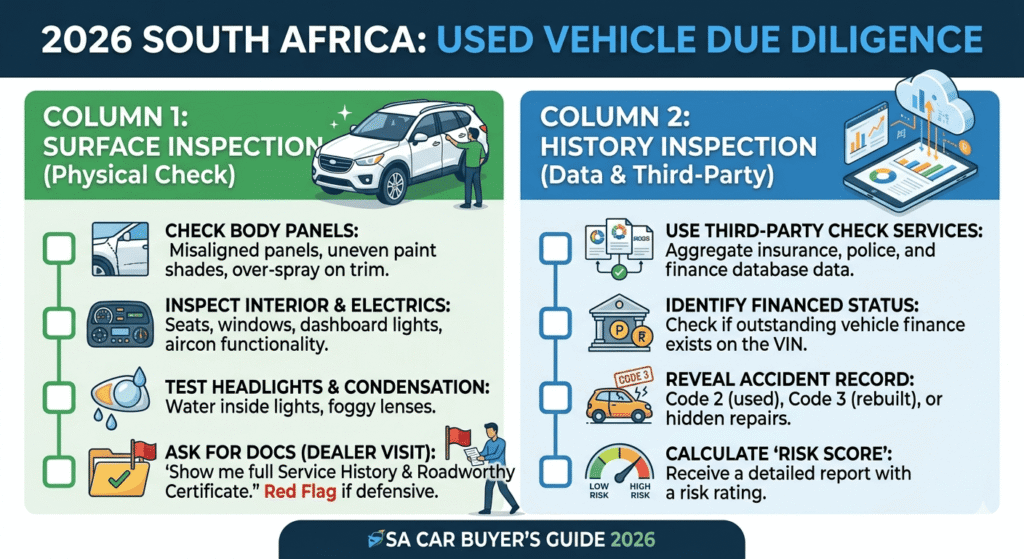
Don’t just look at the car—look at its history. Dig deeper to ensure your investment is solid.
Why Verification is Your Best Investment
Paying a small fee for a comprehensive vehicle history report is the cheapest insurance you will ever buy. It’s a drop in the ocean compared to the cost of fixing a structural defect or fighting a repossession claim.
At Car Listing, we encourage our buyers to be diligent. We provide the platform for you to connect with dealers, but we want you to enter every transaction with your eyes wide open. Transparency is the bedrock of a healthy marketplace—and we believe the more you know, the better your car-buying experience will be.
Don’t take “accident-free” at face value. Do your homework, check the history, and drive away with confidence.