



The Bakkie Breakdown: Navigating the New Workhorse Market
Built for the Load, Ready for the Road
In South Africa, the bakkie isn’t just a vehicle—it’s a business partner. For years, the market was dominated by a few legendary names. But in 2026, the landscape has shifted. We are seeing a surge of high-value Chinese bakkies entering the market, offering features that were once reserved for luxury SUVs.
Whether you are running a construction outfit in Gauteng, managing a farm in the Free State, or just need a reliable ride for the daily grind, the decision now comes down to a choice: Proven Heritage or Modern Value?
The Established Legends (The “Heritage” Choice)
The “Big Three”—Toyota Hilux, Ford Ranger, and Isuzu D-Max—remain the pillars of the industry.
- Why they win: They own the resale market. Parts are available in every town from Sandton to the smallest Platteland dorpie. You know exactly what you are getting, and you know it will still have value in five years.
- The Trade-off: You pay a premium for the badge. To get top-tier technology or luxury interiors, you often have to climb into the highest (and most expensive) trim levels.
The New Disruptors (The “Value” Choice)
Manufacturers like GWM (Great Wall Motors) and JAC have become serious contenders, and for good reason. They are effectively redefining the “entry-level” and “mid-tier” price brackets.
- Why they win: They offer “more car for your money.” You can often walk away with a leather interior, a 360-degree camera, and a modern infotainment system for the price of a base-model Japanese bakkie. They are lowering the barrier to entry for small business owners who need a modern, professional-looking vehicle to represent their brand.
- The Trade-off: They are still building their “long-term” reputation. While their dealership networks are growing rapidly in South Africa, some buyers remain cautious about long-term parts availability and depreciation compared to the established legends.
Comparison: Choosing Your Strategy
| Strategy | Recommended Brands | Best For |
|---|---|---|
| Long-Term Asset | Toyota, Ford, Isuzu | Buyers who prioritize resale value and local parts availability above all else. |
| Modern Value | GWM, JAC | Buyers who want modern technology, luxury features, and a lower upfront purchase price. |
Pro-Tip: How to Buy Your Next Bakkie
When shopping for a bakkie on Car Listing, don’t just look at the brand name. Use these three filters to find a workhorse that won’t let you down:
- Check the Load Bin: If the bin is badly dented, it doesn’t mean the car is “broken,” but it does mean it was a workhorse. Adjust your offer to reflect the wear and tear.
- Service History vs. Brand Loyalty: A Chinese bakkie with a full, documented service history at an authorized dealer is a much safer buy than a legendary “unbreakable” bakkie that has been maintained in someone’s backyard.
- The “Pre-Approval” Advantage: Whether you are buying a Hilux or a P-Series, getting your finance pre-approved before you start looking is the smartest business move you can make. It puts you in the driver’s seat during negotiations, especially when dealing with high-volume dealerships.
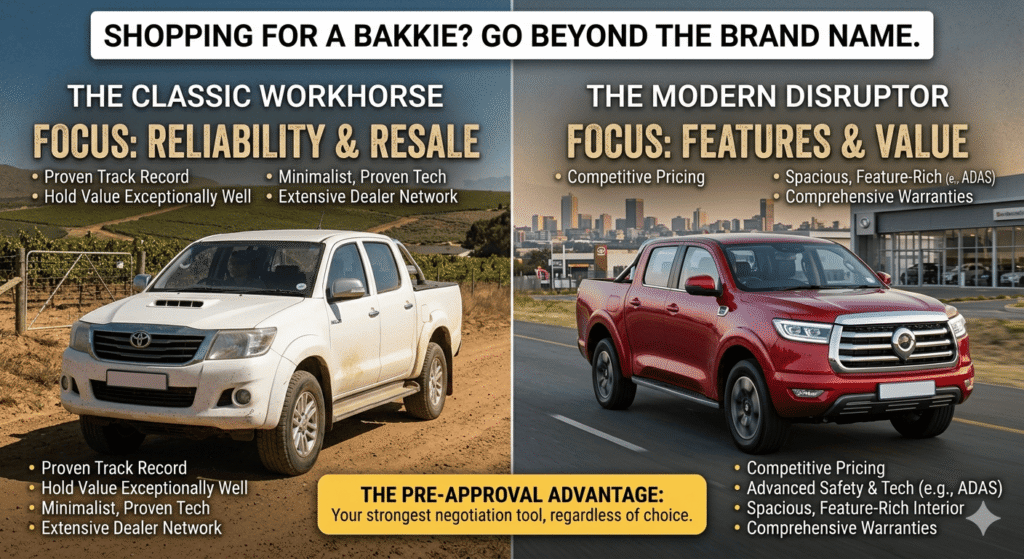
The classic choice or the modern disruptor? Match the bakkie to your business goals.
Invest in Your Business
Your bakkie is an asset, not an expense. Whether you choose the heritage of a Hilux or the feature-rich value of a GWM, ensure you are buying from a reputable source.
Search our verified listings on Car Listing today to find the workhorse that fits your budget and your business. Let’s get you back on the road.
Strategic Notes for Article 15:
- Tone: Balanced, objective, and industry-savvy.
- Value: It validates the user’s observation about the market shift, which builds trust in your platform’s expertise.
- Next Step: Article 16, “The Hidden Costs of Used Cars,” which discusses “Maintenance Provisioning”—the final, crucial piece of advice for a buyer.
Would you like to move on to Article 16: “Budgeting for the Unexpected: Why you should always set aside 10% of your vehicle budget for immediate maintenance”?